


Run inference. Earn like a miner.
Every inference job completed on your node earns a block reward. No staking minimum, no validator club — just compute work and cryptographic proof.
Three work types. One reward pool.
Inference
Fine-tuning
Training
Contribute gradient updates to an active fine-tune run. Work is dispatched by the protocol; your node processes assigned parameter shards and earns proportionally.
Participate in distributed training epochs. Nodes handle data-parallel workloads; the network validates contribution weight before issuing rewards.
Complete a verified inference job on the 600B-parameter model. Each completed call submits cryptographic proof and triggers a block reward.
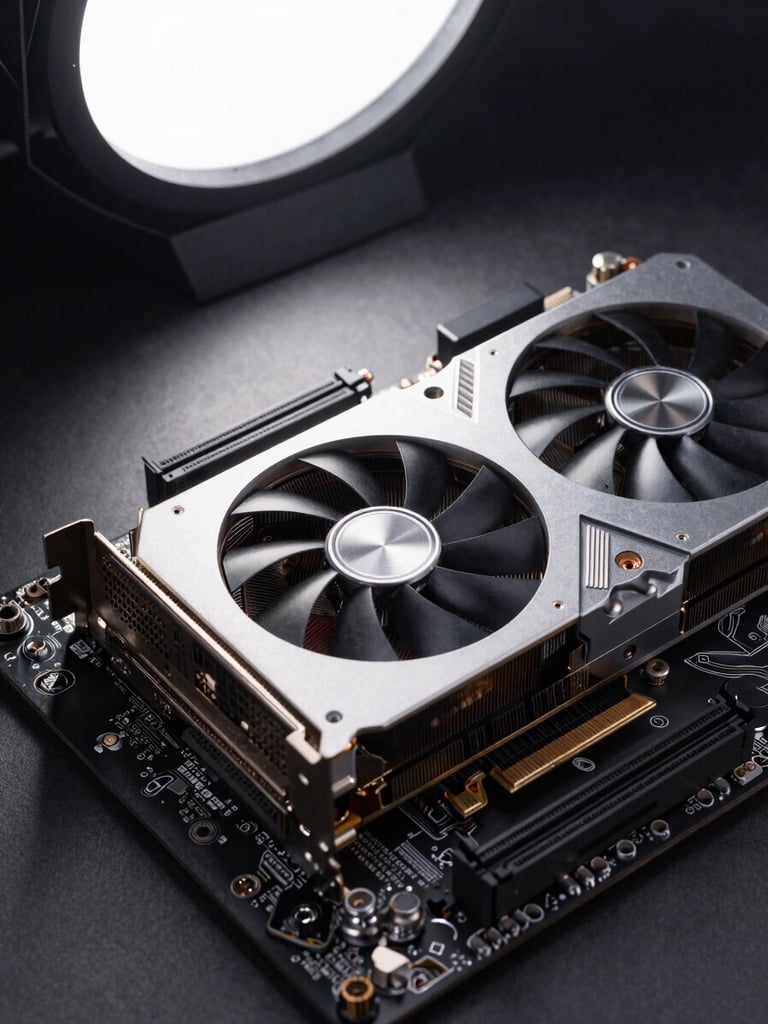
Consumer hardware qualifies.
The network shards compute across participating nodes. No enterprise rack required — a prosumer GPU with sufficient VRAM enters the reward pool immediately.
Minimum: 16 GB VRAM, 32 GB system RAM, 500 GB NVMe. Recommended: 24 GB VRAM for fine-tuning eligibility. SVM-compatible client runs on Linux or macOS.
1 — Install the node client
Pull the Ambient node binary from docs.ambient.xyz. Verified builds available for Linux x86-64 and macOS ARM. Runs as a background service.
2 — Set your reward wallet
Install. Configure. Earn.
Provide any SVM-compatible wallet address in the config file. Block rewards route directly to that address — no intermediary, no custody.
3 — Point at the network
Set the RPC endpoint, launch the daemon. The protocol detects your hardware tier and dispatches inference or fine-tuning jobs automatically.